

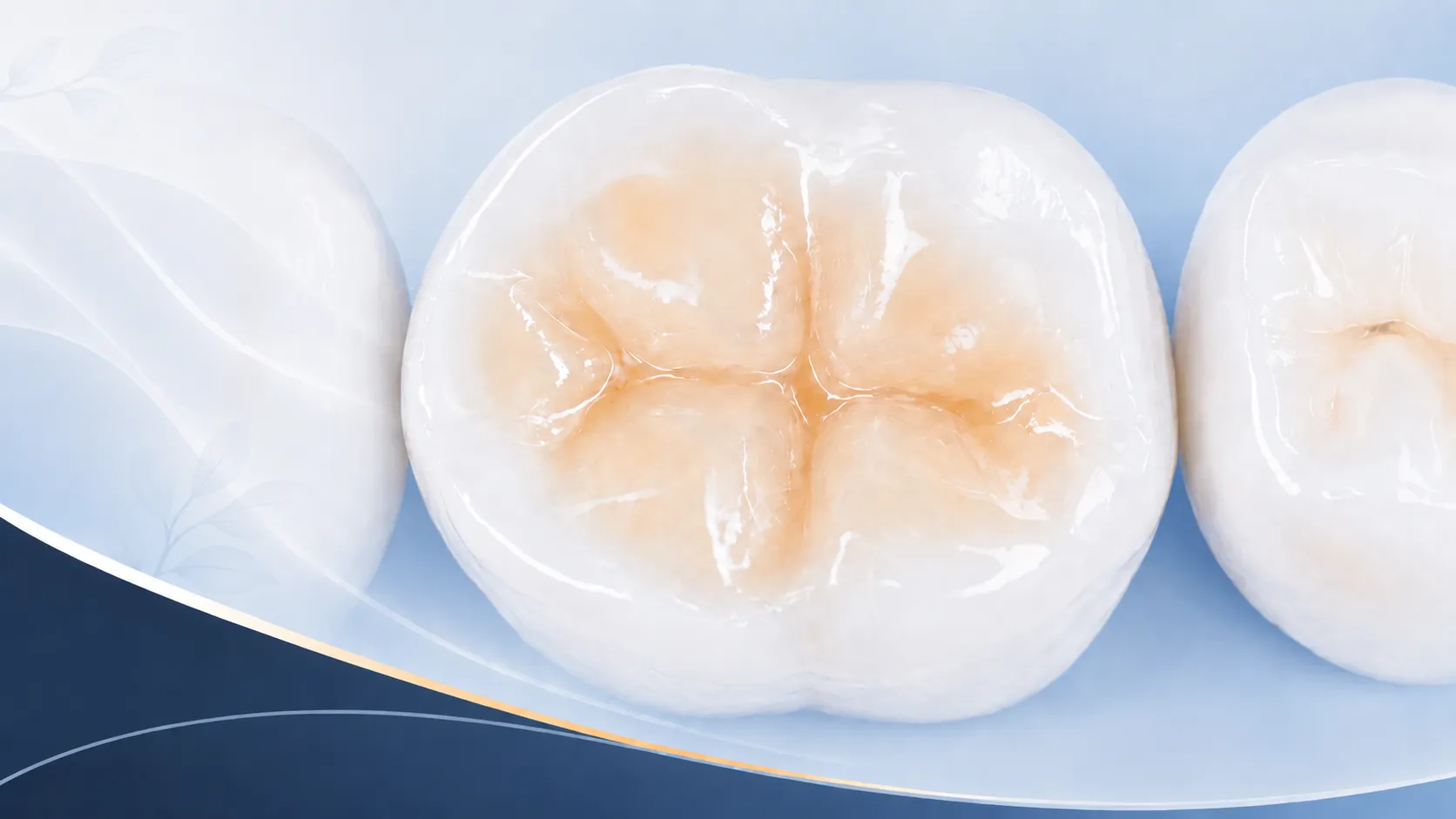
Extra Protection Where a Toothbrush Has Trouble Reaching
Morton Family Dentistry applies sealants to selected molars and premolars to lower the chance of decay in narrow pits and grooves.
The chewing surfaces of back teeth are not always smooth. Narrow grooves can hold plaque and food even when a child or adult brushes consistently. A sealant covers those vulnerable areas with a thin resin barrier.
Sealants are most often discussed when permanent molars appear, but age alone does not determine the recommendation. Morton Family Dentistry considers the depth of the grooves, cavity history, hygiene, and overall risk.
What Happens During Sealant Placement?
- The tooth is cleaned so no debris is trapped beneath the material
- The surface is conditioned to help the sealant bond
- Liquid resin is flowed into the pits and grooves
- A curing light hardens the coating
- The bite is checked before the patient leaves
No Drilling Is Needed for a Healthy Tooth
Sealants are preventive. When the tooth is free of decay, the process does not require removal of healthy enamel or local anesthetic.
Sealants Need to Be Checked
Normal chewing can wear or chip the coating over time. The dental team examines sealed teeth during regular visits and can repair or replace the material when needed.
Protection Does Not Replace Daily Care
A sealant covers only the treated chewing surface. Brushing, flossing, fluoride, a balanced diet, and regular exams remain necessary for the rest of the tooth and mouth.
Ask About Sealants in Morton
Families from Morton, Washington, Groveland, and nearby communities can ask Morton Family Dentistry to check newly erupted molars and other cavity-prone teeth to determine whether sealants would add useful protection.
Frequently Asked Questions
Can a sealant be placed over a cavity?
A tooth must be evaluated first. Early areas may sometimes be managed differently, but established decay generally needs restorative treatment rather than simple sealing.
How long do sealants last?
They can remain effective for years, but their condition should be checked at routine dental visits.